St. Stephen's Crown — Holy Crown of Hungary

In Her Own Words

I was born two months after my parents arrived in America.

Before they had learned a single English word. October 1969. My mother was twenty. My father was twenty-six. This is how I ended up here.

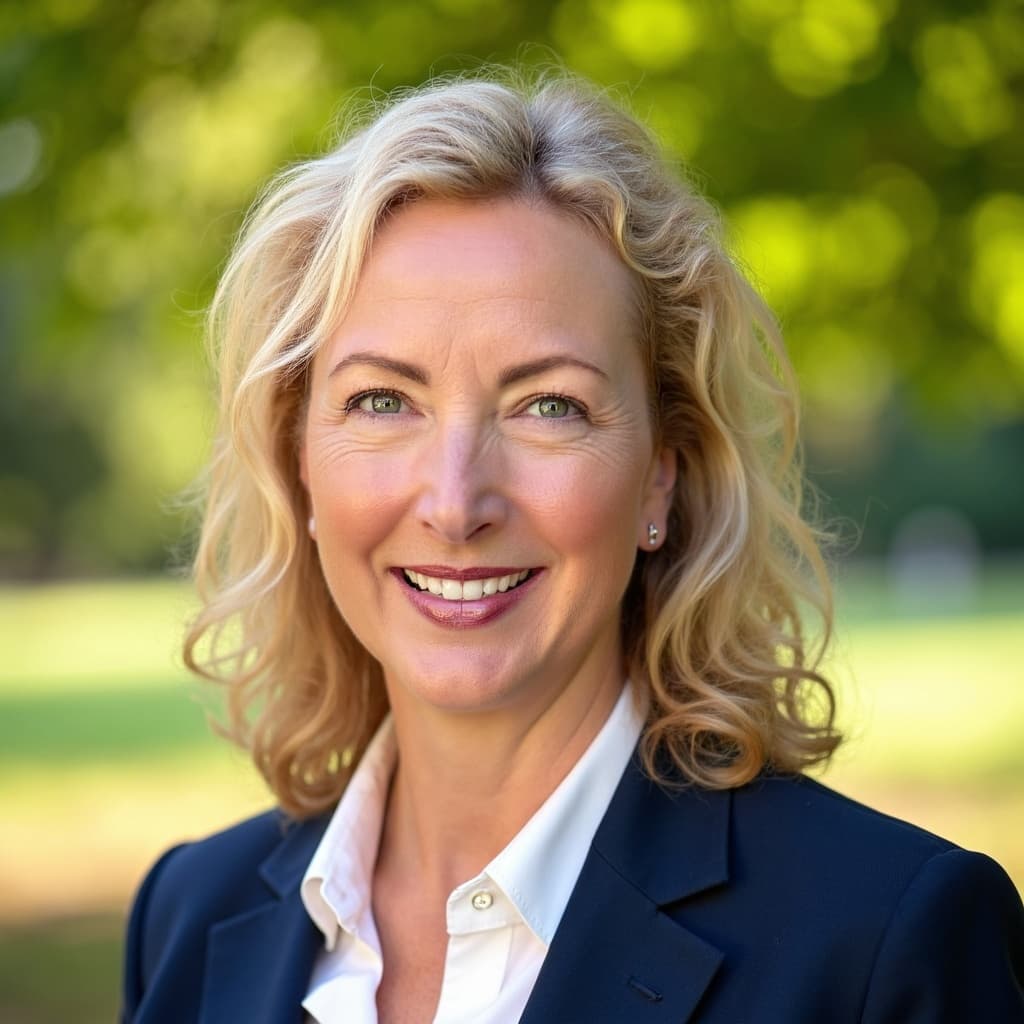
Sylvia Rich

Honorary Consul of Hungary for New England

Appointed by Embassy of Hungary, Washington DC

Credentials & Authority

The Authority Behind the Title

  • Officially appointed by the Embassy of Hungary in Washington DC

  • Authorized under the Vienna Convention on Consular Relations

  • Covers Maine, Vermont, New Hampshire, Rhode Island, and Massachusetts — five states, no other honorary consul between Connecticut and Canada

  • Bilingual: English and Hungarian — native fluency in both

  • Network spans medical, legal, psychological, and diplomatic contacts across New England

  • University of Michigan, Teaching English as a Second Language

  • Former PR director, post-communist Central Europe — Budapest, Prague, Vienna (1991–1994)

  • The position is voluntary — compensation only for active consular duties

01Where I Come From

October 1969

I was born two months after my parents arrived in America, which means I came into this world before they had learned a single English word. My mother was twenty years old. My father was twenty-six. They had been in the country since August, and in August they still couldn't read a street sign or order food from a menu or understand what the person at the bank counter was asking them. I arrived into that silence — that particular kind of silence that falls over a household when two people are trying to build a life in a language they don't yet have.

Let me tell you how they got here, because it matters. It matters to everything I do now.

My parents were from Hungary. In 1969, Hungary was a communist country — had been since after World War II, when the Soviet Union came in under the pretense of liberating us from German occupation and then simply stayed. In 1956, Hungary had twelve extraordinary days of freedom. Students organized, got people into the streets of Budapest, and on Radio Free Europe contacted the United States directly: We've taken our country back. We are free. Please send reinforcements. The United States was in the middle of the Suez Canal crisis and couldn't be bothered. The Soviet Union came back and crushed the revolution completely.

Many of those who had fought — a significant number of them scientists and engineers, many responsible for the Manhattan Project, which most people don't know — fled in the aftermath. My father's brother was one of them. Westinghouse and General Electric were actively recruiting these Hungarian minds. By 1969, my father had spent thirteen years watching his brother build a life in the United States while he stayed in Hungary under communist rule. He was twenty-six years old. My mother was twenty. And my father said: we are going to America.

I arrived into that silence — that particular kind of silence that falls over a household when two people are trying to build a life in a language they don't yet have.

02The Escape

The Bus Stop in Vienna

You needed government permission to leave Hungary in those days. Even a weekend trip required approval. My parents applied for a travel permit — a weekend in Vienna to see the museums. Austria and Hungary are neighboring countries, about the distance from New Hampshire to Massachusetts. The communist government allowed these carefully controlled excursions. They let you feel like you had some freedom, so you wouldn't feel so much like you were trapped.

My parents had the permit. They got on the bus. They crossed into Austria. And when the bus stopped and everyone else walked toward the museum entrance, my parents walked the other way.

My father had arranged everything in advance — quietly, carefully, over time. There was a contact. A safe house. Someone who would keep them hidden until he could get word to his brother in the United States. He wrote a letter: We've made it. Can you send money? The money came through the Red Cross. And in August 1969, my parents boarded a flight from Vienna to JFK and arrived in New York with almost nothing, a baby on the way, and no English whatsoever.

My mother tells me they stood in the airport and had absolutely no idea what anyone was saying.

When the bus stopped and everyone else walked toward the museum entrance, my parents walked the other way.

03Building a Life

Sears. The Hair Salon. Night School.

The rules in America in those days were clear and unforgiving. If my father could not support his family, my uncle — who had sponsored their entry — was financially responsible for them. There was no welfare, no food stamps, no language assistance, no programs designed to ease the transition. You arrived, and you figured it out, and the expectation was that you would figure it out quickly.

My father was a trained engineer. But engineering requires being able to communicate with clients, to read blueprints and specifications and contracts — none of that was possible yet in a language he didn't speak. What he noticed was that televisions are the same everywhere in the world. He got a job at Sears repairing television sets. He worked with American men who taught him English the way you really learn a language — by using it every day in the context of actual work.

My mother is a cosmetologist. She understood immediately that hair is also universal. Everybody has hair. She went to work in a salon, and the women there did for her what those men at Sears had done for my father — they talked to her constantly, they included her, they helped her understand. She learned English in a hair salon in Massachusetts, and I think there's something beautiful about that.

In the evenings, they walked to the local high school. They sat in classrooms with teenagers and learned the American Constitution, American civics, American history. They took their driving tests in English, which was the only option available. My father went on to start his own medical device company. My mother opened her own day spa. They completed the American dream exactly as advertised — not easily, not without sacrifice, but completely.

04A Childhood in Two Countries

The Tag Around My Neck

Every June, on the last day of school, my parents put me on a plane to Hungary.

They had discovered that a transatlantic plane ticket cost less than American summer daycare — which tells you something about the economics of immigration in the 1970s and also about the creative problem-solving that first-generation families develop out of necessity. My grandmother was in Hungary. I could stay with her for the summer, learn the language, know my roots, and my parents could work the extra hours that summer afforded them without worrying about childcare.

They put a tag around my neck — the way airlines used to transport unaccompanied children, with all the relevant information about where this child was going and who would collect her. I flew alone across the Atlantic Ocean every summer from the time I was eight years old. On one end, my parents put me on the plane. On the other end, my grandmother collected me.

I spent every summer of my childhood at my grandmother's house in Hungary. I learned Hungarian the way you only learn a language when you have no alternative — completely, from the inside, without a textbook. I made real friendships there that I've maintained across decades. When I came home in August, I was American again. When I went back in June, I was Hungarian again. By the time I was a teenager, I wasn't really either one or the other in any pure sense. I was something that moves between them — which turned out to be exactly what I was supposed to be.

I was something that moves between them, which turned out to be exactly what I was supposed to be.

05Budapest, 1991

Two Days After Graduation

I graduated from college in 1991. That was the year the full consequences of the Berlin Wall coming down were really hitting the world — the Iron Curtain was dissolving, the communist economies were opening, and Western companies were flooding into Central Europe at extraordinary speed to capture what they understood as a historic opportunity.

I was an intern at a PR firm in Philadelphia when someone walked into the office and announced they were opening offices in Budapest, Prague, and Vienna. They asked if anyone spoke any of those languages. I raised my hand. I was, as I said, the intern. When can you leave? Graduation was the following week. I would very much like to walk across the stage and receive my diploma, I said. Fine. Two days after graduation, I was on a plane.

I was twenty-one years old when I landed in Budapest with a budget of several million deutschmarks — the euro didn't exist yet — and clients that included some of the largest corporations in the world. Procter & Gamble, Philip Morris, Colgate-Palmolive, Unilever — all moving fast into post-communist Central Europe, all needing someone who understood both sides of the transaction. There was no handbook for what I was doing, because this particular historical moment had never happened before.

My favorite client was British American Tobacco. Their sponsorship of Formula One racing gave me one of the most extraordinary experiences of my career. Hungary was the only country behind what had been the Iron Curtain with a Formula One Grand Prix circuit. Every year, international journalists and the global F1 press descended on Budapest, and I was the person running those press conferences — translating between Hungarian officials, international drivers, and the worldwide media. I was twenty-two years old.

When can you leave? Two days after graduation, I was on a plane.

06London. Johannesburg. Michigan.

How the World Kept Getting Bigger

Budapest in the early 1990s attracted a specific kind of person — someone with enough confidence in their own abilities to show up in a place with no established rules and figure it out. My husband was one of those people. He was British, sent by Saatchi & Saatchi to open their Eastern European operation, working the same territory I was working but from the advertising side. We were both trying to help Western companies understand how to communicate with people who had lived their entire lives in a system where advertising didn't exist. We found each other doing it.

I lived in Budapest for three years. Then my husband was transferred to London, and I went with him. Then to Johannesburg, where our daughter was born. I kept working in public relations throughout — the skills transferred across contexts.

When the children were young and I had more time to think about what I wanted to do next, I went back to school. I enrolled at the University of Michigan and got a degree in Teaching English as a Second Language. The reason was personal and it still is. I remember sitting in a kindergarten classroom as a small child — those early years before my English was solid enough to navigate an American school — and not understanding anything anyone was saying. Watching the other children respond to questions I couldn't parse. Feeling the specific kind of loneliness that comes from being in a room full of people and being unable to communicate with any of them. I had eventually learned the language. But I never forgot what it felt like before I had it.

I never forgot what it felt like before I had it.

07The Appointment

Boston. The Hungarian Society. The Phone Call.

When we settled in the Boston area, I found the Hungarian community there. The Boston Hungarian Society is genuinely remarkable — it has a book club, a science club, formal celebrations and ceremonies, a level of organizational life that most Hungarian communities in the United States don't have. I became involved gradually. I attended the events. I showed up consistently. And through that involvement, I got to know the General Consul of Hungary in New York.

We developed a relationship over time. He understood my background — the languages, the career, the decades of experience moving between the two countries and the two systems. Many of the Hungarian-born professionals in New England were extraordinary people — surgeons, physicists, lawyers, engineers of genuine distinction. But being born in Hungary is not the same as understanding how American institutions work from the inside. How to navigate a hospital bureaucracy, how to call a mayor's office, how the American system of government distributes power in ways that are completely foreign to people who grew up in a different system.

I grew up with a foot in both worlds and spent my career building bridges between them. That was what the Consul saw. That was why he nominated me.

And in due time, the Hungarian government appointed me Honorary Consul of Hungary for New England. Five states. Maine, Vermont, New Hampshire, Rhode Island, and Massachusetts. No other honorary consul between Connecticut and Canada.

When I go to the annual conference at the Hungarian Embassy in Washington DC, the consuls sit at a long table with the flags of their states in front of them. Florida has one. Indiana has one. I have five. They know which seat is mine before I sit down.

08The Work

What I Do, and Why I Keep Most of It Private

The official description is straightforward: I authenticate signatures. I notarize documents. I represent the interests of Hungarian citizens, legal entities, and non-governmental organizations in New England. I am the on-the-ground representative of the Hungarian government for this region. That is all true. And it is approximately a third of the actual job.

The rest operates under the principle that the Vienna Convention identifies discretion as a core professional obligation. I take that seriously. The people who come to me, or who the Embassy sends to me, often come in circumstances that require confidentiality.

I have received parents arriving from Hungary who did not speak English and needed to reach a family member in a hospital. I have coordinated with social workers and psychiatrists to manage situations that required both Hungarian language and a knowledge of how American medical institutions operate. I have facilitated communications between Hungarian government officials and American local government in ways that required someone who could move informally, without the protocol constraints that an ambassador must observe. An ambassador must work through the State Department for formal engagements. I don't have those constraints. If the Hungarian Embassy needs a meeting with the mayor of Boston, they can ask me, and I can make a phone call.

I maintain a network — of medical professionals, legal contacts, government relationships, university administrators, community organizations — so that when a situation arises that I have never encountered before, I have somewhere to turn. There is no handbook for this work, the same way there was no handbook for doing PR in post-communist Budapest in 1991. You show up, you figure it out, and you make sure the person who needed help actually gets it.

09The Paperwork

Why It Matters More Than It Sounds

The notarization and authentication work is quieter than the crisis management, but it matters enormously to the people who need it. When a Hungarian citizen living in New England needs to submit a document to the Hungarian government — a birth registration, a property transaction, a legal consent form, a life certificate for a pension recipient — that document must be authenticated in a specific way by a recognized consular authority. If it is not done correctly, it is rejected. The person then has to start over, often having already spent significant money on lawyers, translation services, and the trip they were planning to take to Budapest.

I once helped a woman renew her eight-year-old son's Hungarian passport. He was a dual citizen — Hungarian and American — and she needed the father's authenticated consent to renew it. We worked through the documentation together. She flew back to Hungary. When she landed in Budapest and submitted the paperwork, the office processed it without a single problem. She told me afterward that they had put our submission on the bulletin board as an example of exactly how consular notarization should be done.

I don't tell that story to congratulate myself. I tell it because of what she said when she thanked me: I spent thousands of dollars on those flights, and the whole time, I was hoping you hadn't made a mistake. That is the weight of this work. People are trusting me with something real. A mistake isn't just an inconvenience — it can mean a wasted trip, a delayed passport, a child who can't travel, a property deal that falls through. Getting it right matters. I take the getting-it-right very seriously.

I spent thousands of dollars on those flights, and the whole time, I was hoping you hadn't made a mistake.

10Why I Do This

What My Parents Gave Me

My father could have stayed in Hungary. It would have been easier in every immediate sense. He spoke the language. He knew the systems. He had a career path, even if it was constrained by what a communist economy allowed. Leaving meant hiding in a safe house in Vienna, waiting for money from a brother he hadn't seen in years, landing in a country where he couldn't speak to anyone, and taking a job fixing televisions when he had been trained as an engineer.

He chose the harder thing because he believed the harder thing would lead somewhere better. And he was right. But more than being right, he was willing to bet everything on being right, with no safety net and a pregnant wife and a country behind him that he could not return to without consequences.

I think about that choice constantly. Not with any sense of drama — my parents don't talk about what they did as though it was heroic. They just lived it, and now they live well, and they're proud of what they built. But I am aware every day that the life I have — the languages I speak, the career I've had, the position I now hold — is downstream of two people who got off a bus in Vienna and kept walking.

The least I can do is be useful to the people who are still making that walk. The Hungarians in New England who are navigating a system they didn't grow up in, who need a document authenticated or a signature witnessed or a phone call made or simply a person who understands both sides of what they're experiencing. I know what that's like — not because someone told me about it, but because I spent my whole life living inside it.

The least I can do is be useful to the people who are still making that walk.

An Honest Word

I am not an immigration lawyer. I am not a financial advisor. I am not a therapist or a medical professional, though I know people in all of those fields and I can connect you with the right ones when you need them. What I am is the official representative of the Hungarian government for this region. I can authenticate documents. I can notarize signatures. I can help you understand what process applies to your situation and put you in contact with the people who can help you complete it. I can be the phone call you make when something has gone wrong and you don't know who else to call. I am available on Mondays for scheduled appointments. My office is in Derry, New Hampshire. I'm not hard to find.

Your Appointment

What to Expect When You Come

01

Book Online

Select a Monday time slot through the booking system. You'll receive a confirmation with the office address and what to bring.

02

Prepare Your Documents

Bring your completed documents, your government-issued ID, and exact cash or a check. Documents should not be signed in advance — you'll sign in Sylvia's presence.

03

Arrive at the Derry Office

The office is at 16 Route 111, Suite 5, Derry, NH 03038 — near LaBelle Winery. Plan for approximately 15 minutes.

04

Review and Authentication

Sylvia reviews your documents, verifies your identity, and performs the notarization or authentication in your presence.

05

Payment and Completion

Pay by cash or check. Your authenticated documents are returned to you, ready for submission to Hungarian authorities.

Monday appointments only

In-person at 16 Route 111, Suite 5, Derry, NH. Bring your documents, valid ID, and payment by cash or check.

Book Your Appointment